


Keeping Orangeville on the move
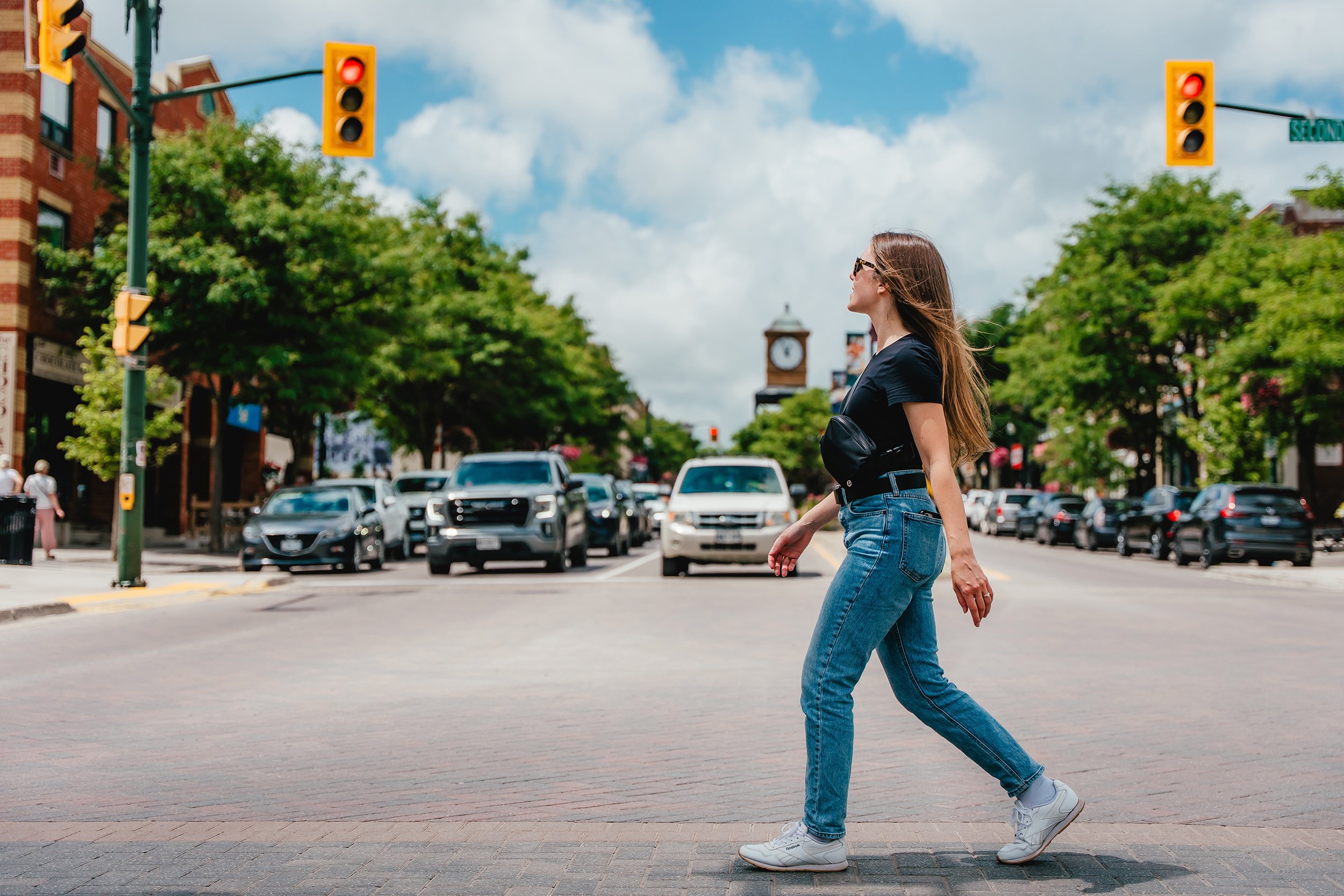
Traffic signals and crossings play an important role in the safety of our community. They help vehicles travel through town in an orderly way, help traffic flow and reduce the risk of collisions. They keep pedestrians safe by providing safe places to cross. They help everyone use our streets together.
The Town of Orangeville currently manages:
- 25 traffic signals
- four pedestrian crossovers
Investing in today, preparing for tomorrow
Safety is important to us—and that’s why we’re making changes to help keep our roads safe and moving smoothly. Through work with a traffic engineering consultant, we’re planning changes to our signals.
These changes will reduce congestion, improve travel times for drivers and improve signal coordination.
They will help us support a safer, more connected community and better prepare for the future by:
- giving us continuous data reviews
- allowing us to monitor traffic challenges in real time
- solve problems more efficiently
- better manage signal issues
Pedestrian crossovers (PXOs)
A pedestrian crossover (or PXO) is the technical term for a crossing where drivers and cyclists need to stop to let people cross. These crossings are marked with signs, road paint, or lights.
There are four types of PXOs in Ontario:
- type A: flashing overhead lights, signs and road markings
- type B: flashing side-mounted lights, signs and road markings
- type C: signs, road markings and sometimes push-button flashing beacons
- type D: signs and road markings only
Crossings at intersections
Although traffic signals provide a safe space to cross, there are still things you can do to make crossing safer. Check out the tips below for all the things you need to know about getting from one side to the other!
When to walk |
|
Intersections and Intersection Pedestrian signals:
Pedestrian crossovers (PXOs):
Pedestrians in these crosswalks have the right-of-way over all vehicles, but you should still be cautious. An active crossing symbol does not guarantee drivers will obey the lights. |
When not to walk |
|
Do not start crossing if:
|
Staying safe while crossing |
|
Although you have the right-of-way when crossing on a walk or flashing hand symbol, it is important to be aware of your surroundings. always check to make sure oncoming traffic is stopping—they are required by law to stop on a red if traffic is not stopping on a walk signal do not step out; wait until they do stop or have passed through do not stop in the middle of the crosswalk, especially if the orange hand is already flashing |
Accessible pedestrian signals (APS) |
|
APS provide pedestrians with vision loss or other challenges to cross safely. They include features that help identify when its safe to cross and when its not.
|
APS sounds |
|
These signals use sounds to show when it is safe to cross. There are a few different sounds you may hear, and these sounds adjust to the background noise. They’re louder in the day and quieter at night. (note—the sound examples will be included here to match the content)
|
Did you know?
- At some crossings, you need to press the pedestrian push-button to bring up the walk signal.
- Pedestrian signals provide more time to cross than regular traffic lights.
- On busy roads, an Intersection Pedestrian Signal (IPS) stops traffic when someone presses the button, making it safer to cross.
- There can be one or more crosswalks at an IPS.
- Orangeville has one IPS, located at Mill Street and Broadway.
Motorists and Intersection Pedestrian Signals
Driving a vehicle? You must treat an IPS like a normal intersection and obey the traffic rules. Use safe driving skills and stop if you see the red light.
Crosswalks and crossing guards

Crosswalks are pedestrian crossings that may not have lights or traffic signals. Almost every intersection has a crosswalk, though not all are marked.
Many crosswalks are located near schools, where students need to cross as part of their walking route.
School crossing guards supervise these crosswalks before and after school. At busier or larger intersections on a school route, our crossing guards help students and their guardians cross safely on a walk light.
Drivers, cyclists and rules for crosswalks with crossing guards
The Ontario Highway Traffic Act requires all cyclists and motorists to stop and wait when crossing guards are helping pedestrians across the road.
Before continuing on, you must wait until the crossing guard and people crossing are off the road.
The acronym STOP is a great way to support our crossing guards and stay safe!
STOP
S – stop at all crosswalks |
| Stop when a crossing guard raises their stop sign—this means they are about to escort pedestrians across. |
T – take notice in school zones |
| Take notice of whether a crossing guard is on duty and slow down when approaching school crossing locations. |
O – obey crosswalk laws |
| Obey the law. Remain stopped until all pedestrians AND the guard have completely exited the roadway. |
P – proceed with caution |
| Proceed with caution. Follow the speed limits and obey all no stopping and no parking signs. Park in designated areas only. |
Contact Us
 Subscribe to this page